Communicable · Very high priority
Dengue
Core disease facts with the linked government programme, prevention and treatment or cure reality.
TypeViral disease — caused by dengue virus.
Image-based identification
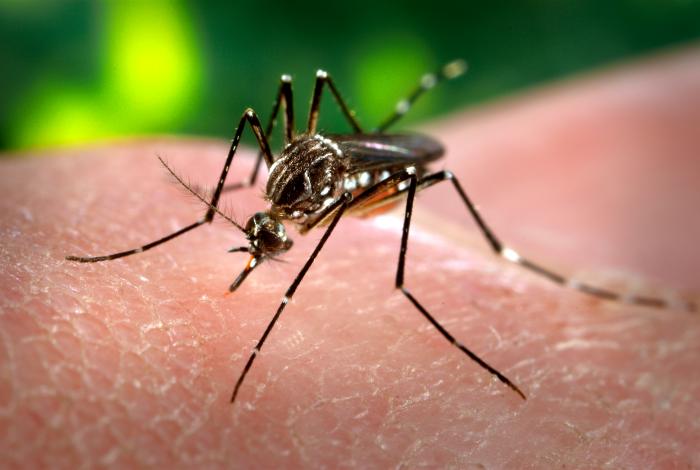
Government programmes, schemes and services
- Programme: National Vector Borne Disease Control Programme (NVBDCP): Aims to reduce dengue illness and deaths through Aedes-breeding control, surveillance, case-management guidance and outbreak response.
- Surveillance: IDSP–IHIP and dengue sentinel surveillance laboratories: Collect case information, confirm suspected dengue and give health teams early warning of clusters or outbreaks.
Prevention
- Prevent: Weekly container emptying/scrubbing, source reduction, daytime bite protection, outbreak reporting
Treatment and cure reality
- Treat: Usually self-limited; no routine specific antiviral cure. Careful fluids, monitoring, and treatment of shock/bleeding save lives.
Must remember
- Serotypes: Four dengue-virus serotypes are classically recognised.
- Vector: Mainly Aedes aegypti; bites mostly during the day.
- Breeding: Artificial containers and clean stagnant water around homes; weekly emptying, scrubbing, drying, and covering are high-yield prevention actions.
- Typical illness: Sudden fever, severe headache, retro-orbital pain, myalgia, arthralgia, nausea, rash, and leucopenia.
- Danger period: Severe dengue often declares itself around defervescence, when fever falls—not necessarily at the highest temperature.
- Warning signs: Severe abdominal pain, persistent vomiting, mucosal bleeding, fluid accumulation, lethargy/restlessness, liver enlargement, or rising haematocrit with a rapid platelet fall.
- Early testing: Non-structural protein 1 antigen or nucleic-acid testing is most useful early; Immunoglobulin M becomes more useful later.
- Platelets alone do not define severity: Shock, bleeding, plasma leakage, organ impairment, haematocrit trend, and clinical condition matter.
- Treatment: No routine specific antiviral; careful oral/intravenous fluid management and monitoring are central.
- Avoid: Aspirin and non-steroidal anti-inflammatory drugs because they increase bleeding risk; paracetamol is generally preferred for fever.
- Antibiotics: Not useful for uncomplicated viral dengue.
- Prevention: Source reduction, personal protection, community action, and prompt reporting of clusters.