Communicable · High priority
Leprosy
Core disease facts with the linked government programme, prevention and treatment or cure reality.
TypeBacterial disease — caused by Mycobacterium leprae.
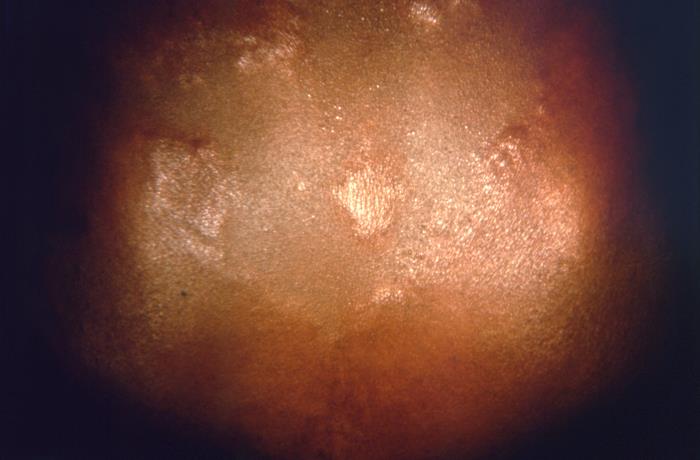
Image-based identification
Government programmes, schemes and services
- Programme: National Leprosy Eradication Programme (NLEP): Provides free early diagnosis, multidrug therapy, contact screening, disability prevention, rehabilitation and anti-stigma work, aiming to interrupt transmission at district level.
- Service: Nikusth 2.0: The digital platform used for real-time leprosy case reporting, tracking and programme monitoring.
- Campaign: Sparsh Leprosy Awareness Campaign: Promotes early self-reporting and works to remove myths, stigma and discrimination associated with leprosy.
Prevention
- Prevent: Early case/contact detection, prompt treatment to stop transmission, disability prevention, stigma reduction
Treatment and cure reality
- Treat: Curable with complete multidrug therapy; existing nerve damage/disability may need long-term care.
Must remember
- Main tissues: Skin and peripheral nerves; eyes and upper-respiratory mucosa may also be involved.
- Transmission: Prolonged, close exposure to droplets from an untreated case; it is not highly contagious through brief casual contact.
- Cardinal signs: Definite loss of sensation in a pale/reddish skin patch; thickened peripheral nerve with sensory/motor loss; or acid-fast bacilli on slit-skin smear.
- Paucibacillary: Usually 1–5 skin lesions with no bacilli detected.
- Multibacillary: More than 5 lesions, nerve involvement, or bacilli detected.
- Treatment: Multidrug therapy using rifampicin, dapsone, and clofazimine under programme protocols; do not call dapsone monotherapy the current treatment.
- Reaction is not treatment failure: Acute inflammatory lepra reactions can occur before, during, or after multidrug therapy and require prompt nerve-function assessment.
- Disability prevention: Early diagnosis, self-care, ulcer care, protective footwear, physiotherapy, and reconstructive services.
- National status: India achieved elimination as a public-health problem nationally in 2005, defined as prevalence below 1 per 10,000—not eradication.
- Current target: Interruption of transmission at district level by 2027 under the National Strategic Plan 2023–2027.
- Recent policy: Revised treatment was implemented in 2025, and leprosy was declared a notifiable disease.
- Digital system: Nikusth 2.0 supports case-based reporting and surveillance.