Communicable · Very high priority
Human Immunodeficiency Virus and Acquired Immunodeficiency Syndrome
Core disease facts with the linked government programme, prevention and treatment or cure reality.
TypeViral disease — HIV is a retrovirus; AIDS is the advanced stage of untreated infection.
Image-based identification
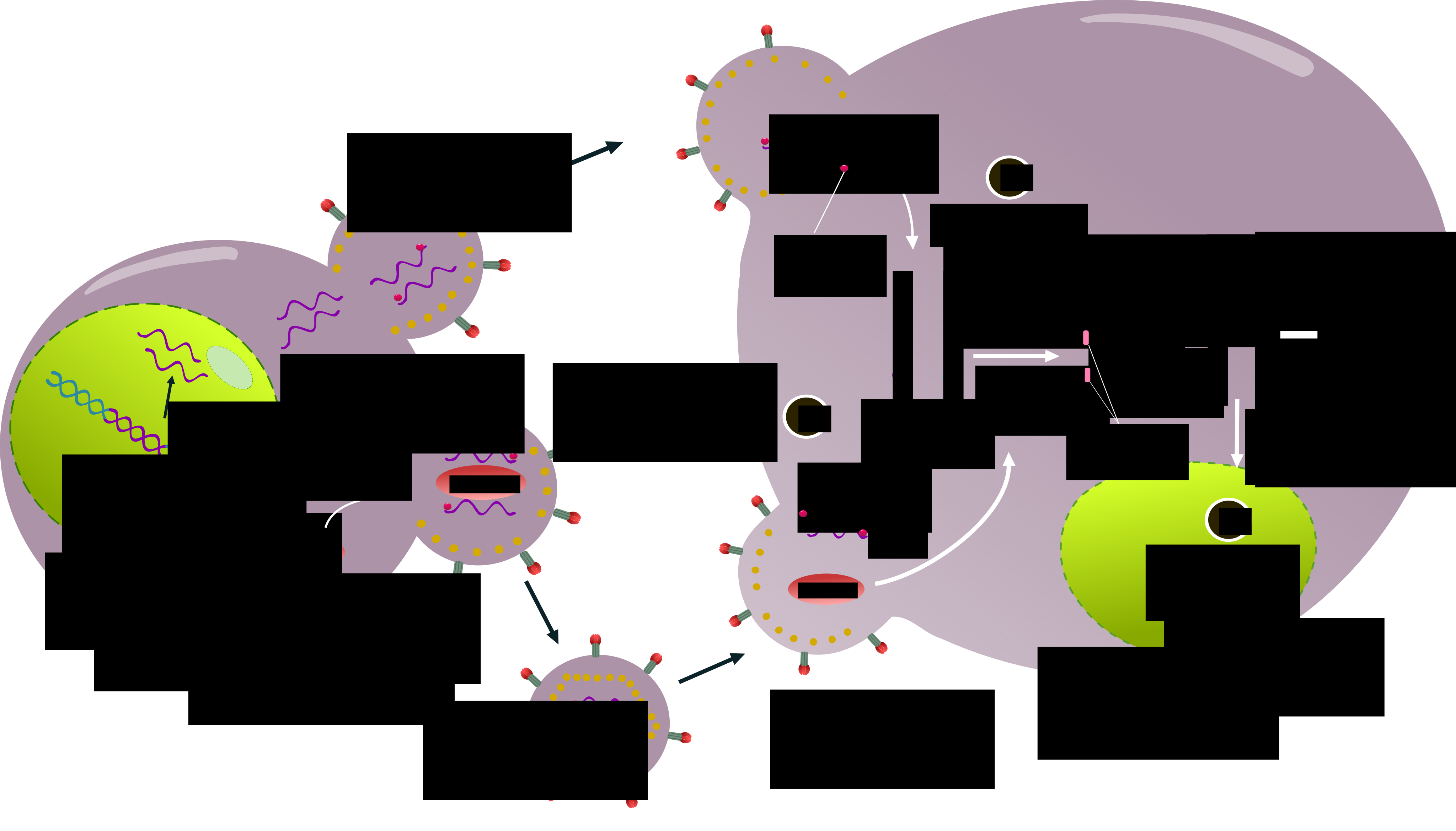
Government programmes, schemes and services
- Programme: National AIDS and STI Control Programme: Provides HIV prevention, confidential testing, free antiretroviral treatment, viral-load monitoring, safe-blood services, STI care and prevention of parent-to-child transmission.
- Mission: Mission AIDS Suraksha: The current intensified district-led push to reach the 95-95-99 HIV-care targets and achieve epidemic control by 1 December 2027.
- Service: ICTC, ART Centre and Sampoorna Suraksha Kendra: ICTCs test and counsel, ART centres provide HIV medicines and follow-up, and Sampoorna Suraksha Kendras integrate prevention and STI/HIV services for at-risk people.
Prevention
- Prevent: Safer sex/condoms, safe blood and injections, sterile needles, testing, pre-/post-exposure prophylaxis, maternal treatment
Treatment and cure reality
- Treat: No routine sterilising cure. Lifelong antiretroviral therapy suppresses virus, restores health, and prevents sexual transmission when viral load stays undetectable.
Must remember
- Human Immunodeficiency Virus: Attacks immune cells, especially CD4 T lymphocytes.
- Acquired Immunodeficiency Syndrome: Advanced stage of untreated Human Immunodeficiency Virus infection; the terms are not interchangeable.
- Transmission: Sexual contact, infected blood/blood products or shared needles, and parent-to-child transmission during pregnancy, birth, or breastfeeding.
- Not transmitted by: Hugging, sharing food, mosquito bites, toilets, or ordinary social contact.
- Testing principle: A reactive screening test is not by itself a final diagnosis; the national serial-testing strategy must be completed.
- Counselling 5 Cs: Consent, confidentiality, counselling, correct results, and connection/linkage to care.
- Treatment: Combination antiretroviral therapy is lifelong; India follows a test-and-treat approach.
- Viral load: The preferred marker for response to treatment; CD4 count chiefly reflects immune status.
- Undetectable equals untransmittable: A person maintaining an undetectable viral load on treatment does not sexually transmit Human Immunodeficiency Virus.
- Post-exposure prophylaxis: Start as early as possible after a significant exposure; the classic exam limit is within 72 hours, with a 28-day course under protocol.
- Prevention of vertical transmission: Antenatal testing, maternal antiretroviral therapy, safe infant management, early infant diagnosis, and follow-up.
- Helpline: National Acquired Immunodeficiency Syndrome Control Organisation helpline 1097.
- Current target: Mission AIDS Suraksha seeks epidemic control by World AIDS Day, 1 December 2027 and emphasizes high-priority districts.
- Phase trap: National AIDS and Sexually Transmitted Disease Control Programme Phase V ran from 1 April 2021 to 31 March 2026. Do not invent “Phase VI” unless an official notification names it.