Communicable · Medium priority
Scrub typhus
Core disease facts with the linked government programme, prevention and treatment or cure reality.
TypeBacterial disease — caused by Orientia tsutsugamushi, a rickettsial bacterium.
Image-based identification
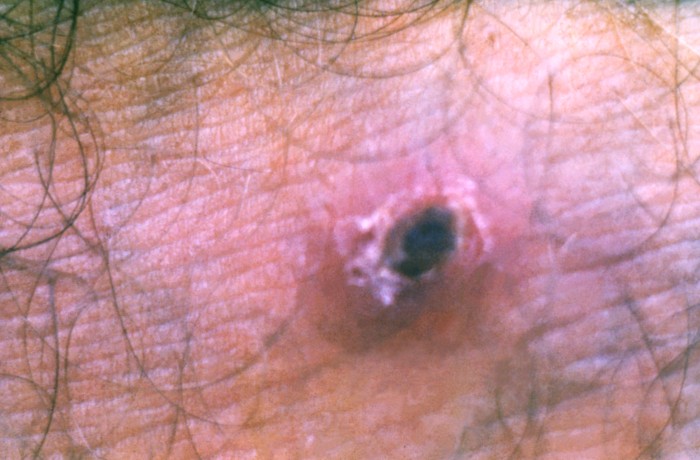
Government programmes, schemes and services
- Surveillance: Integrated Disease Surveillance Programme–IHIP: Captures suspected and confirmed cases so fever clusters can be investigated and outbreaks recognised early.
- Odisha initiative: Odisha rickettsial-disease treatment guidance: Guides clinicians on suspecting, testing and promptly treating scrub typhus; there is no separate national scrub-typhus scheme to memorise.
Prevention
- Prevent: Avoid mite-infested vegetation/soil, protective clothing, repellents, early recognition after monsoon exposure
Treatment and cure reality
- Treat: Curable with early appropriate antibiotics; doxycycline is classic and azithromycin is an important alternative.
Must remember
- Vector: Larval trombiculid mite, called a chigger—not a tick or mosquito.
- Clues: Fever, headache, myalgia, lymphadenopathy, rash, and an eschar; absence of eschar does not exclude disease.
- Seasonal clue: Often rises during rainy and post-monsoon periods.
- Testing: Immunoglobulin M Enzyme-Linked Immunosorbent Assay is useful; Weil-Felix OX-K is less sensitive and nonspecific, while Immunofluorescence Assay is a reference standard.
- Treatment concept: Doxycycline is the classic drug; azithromycin is an important alternative, including in pregnancy under medical guidance.