Communicable · High priority
Viral hepatitis
Core disease facts with the linked government programme, prevention and treatment or cure reality.
TypeViral diseases — caused by hepatitis A, B, C, D or E viruses.
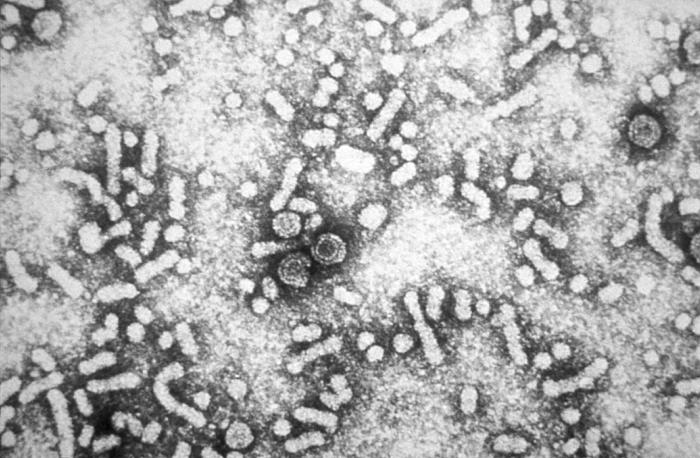
Image-based identification
Government programmes, schemes and services
- Programme: National Viral Hepatitis Control Programme: Provides awareness, prevention, free screening, diagnosis, counselling and treatment, with elimination of hepatitis C as a public-health problem targeted for 2030.
- Programme: Universal Immunisation Programme: Prevents hepatitis B through the birth dose and subsequent hepatitis-B-containing vaccine doses in the national schedule.
- Surveillance: National Viral Hepatitis Surveillance Programme: Tracks hepatitis trends and outbreaks to guide prevention and public-health action; it is distinct from the treatment programme.
Prevention
- Prevent: Hepatitis B birth dose and full vaccination, safe blood/injections, sterile equipment, safer sex, sanitation for hepatitis A/E
Treatment and cure reality
- Treat: Hepatitis A/E are usually self-limited; chronic hepatitis B is controllable, not usually cured; hepatitis C is usually curable with direct-acting antivirals.
Must remember
- Hepatitis A and E: Mainly faeco-oral; linked to contaminated food/water.
- Hepatitis B, C, and D: Mainly blood/body-fluid transmission; hepatitis B also commonly spreads perinatally.
- Hepatitis D: Requires hepatitis B virus for replication; preventing hepatitis B also prevents hepatitis D.
- Chronic infection: Hepatitis B and C are the principal viral causes of cirrhosis and hepatocellular carcinoma.
- Vaccines: Available for hepatitis A and B; no vaccine for hepatitis C.
- Hepatitis B birth dose: Give as soon as possible, preferably within 24 hours of birth.
- Hepatitis C: Direct-acting antiviral drugs can cure most infections; a reactive antibody test indicates exposure and requires a nucleic-acid test to establish current infection.
- Hepatitis E pregnancy trap: Can be particularly severe in pregnancy.
- National Viral Hepatitis Control Programme: Launched on 28 July 2018.
- Programme target: Elimination of hepatitis C as a public-health problem by 2030.
- World Hepatitis Day: 28 July.