OSSSC Nursing Disease Guide

Government response

Programmes and schemes

Match each programme to its disease area, official identity and likely exam confusion.

Official programme images

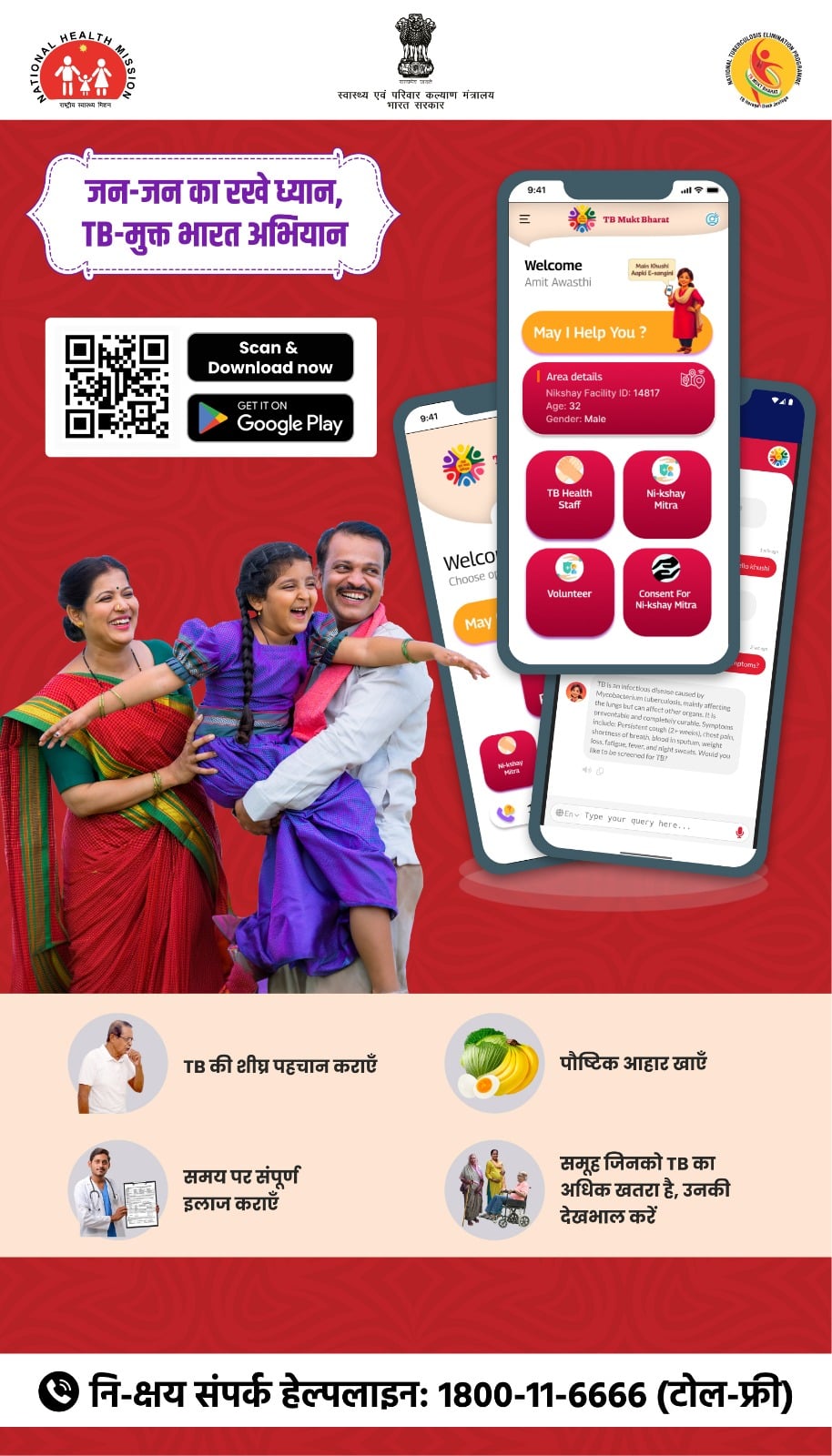
Official TB Mukt Bharat campaign poster showing the Ni-kshay digital service
What to rememberProgramme image: connect TB-Mukt Bharat and Ni-kshay with the National Tuberculosis Elimination Programme.Image credit: National Health Mission and Ministry of Health & Family Welfare
Mission Indradhanush vaccination graphic from a Government of India explainer
What to rememberMission Indradhanush promotes full immunisation; U-WIN supports digital vaccination records and reminders.Image credit: Press Information Bureau, Government of India
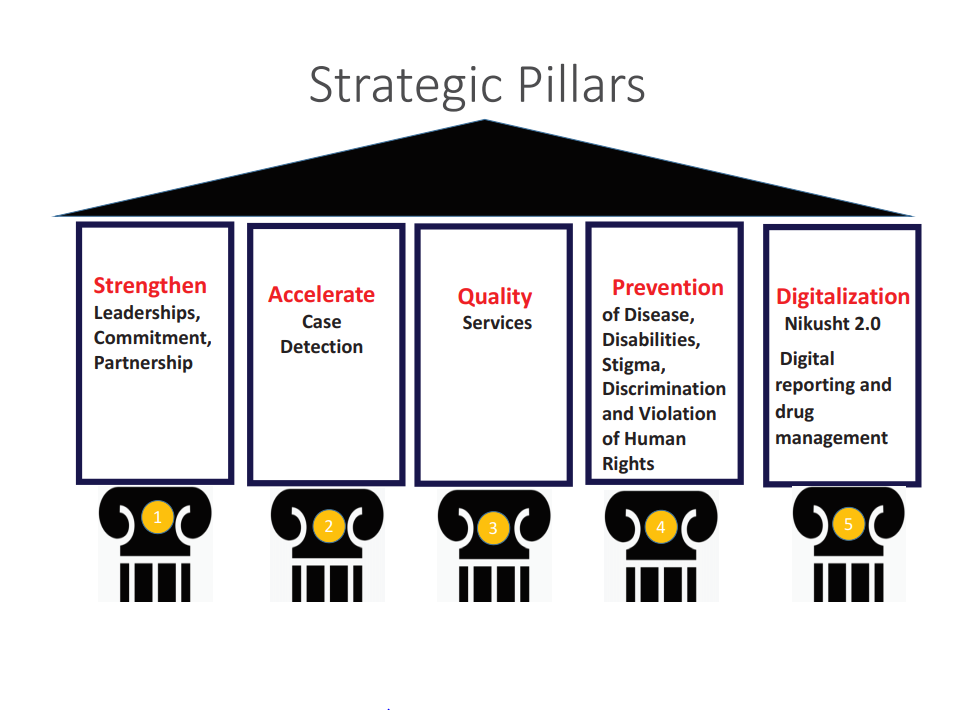
Five strategic pillars of the National Leprosy Eradication Programme
What to rememberProgramme image: NLEP links early detection, quality services, disability prevention and surveillance.Image credit: Directorate General of Health Services, MoHFW

National programmes

Very high

National Tuberculosis Elimination Programme

Do not confuse: Revised National Tuberculosis Control Programme

Current signal: Renamed 1 January 2020; Ni-kshay, notification, molecular testing, active case finding, nutrition support; elimination target 2025.

Very high

Universal Immunisation Programme + U-WIN

Do not confuse: Older paper records / Electronic Vaccine Intelligence Network (eVIN) confusion

Current signal: U-WIN nationally rolled out in 2024 to digitally record and track individual vaccination events; Electronic Vaccine Intelligence Network chiefly manages vaccine stocks and cold chain.

Very high

National Programme for Prevention and Control of Non-Communicable Diseases

Do not confuse: National Programme for Prevention and Control of Cancer, Diabetes, Cardiovascular Diseases and Stroke

Current signal: Old acronym NPCDCS; expanded programme is NP-NCD. Saturation screening of eligible adults ≥30 years.

Very high

National AIDS and Sexually Transmitted Disease Control Programme; current intensified push Mission AIDS Suraksha

Do not confuse: National AIDS Control Programme Phase V ended 31 March 2026

Current signal: Test and treat, Prevention of Parent-to-Child Transmission, viral-load monitoring; epidemic-control target 1 December 2027.

Very high

National Centre for Vector Borne Diseases Control

Do not confuse: National Vector Borne Disease Control Programme / earlier directorate naming

Current signal: Central body covers malaria, dengue, chikungunya, Japanese encephalitis, kala-azar, and lymphatic filariasis. Do not assume all six share one elimination year.

Very high

Ayushman Arogya Mandir

Do not confuse: Pradhan Mantri Jan Arogya Yojana is the hospital-cover component, not the primary-care screening service

Current signal: Comprehensive primary care: prevention, screening, treatment, rehabilitation and palliative care; includes non-communicable diseases, tuberculosis, leprosy, eye, mental, elderly and emergency care.

High

Mission Indradhanush

Do not confuse: Not a replacement vaccine schedule

Current signal: Reaches unvaccinated and partially vaccinated children and pregnant women, especially in low-coverage and hard-to-reach areas.

High

STOP Diarrhoea Campaign

Do not confuse: Earlier Intensified Diarrhoea Control Fortnight framing

Current signal: Prevent–Protect–Treat approach; aims for zero preventable childhood diarrhoeal deaths through Water-Sanitation-Hygiene, Oral Rehydration Solution and zinc.

High

National Leprosy Eradication Programme

Do not confuse: National Leprosy Control Programme

Current signal: Active case detection, contact work, Nikusth 2.0, disability prevention; district-level interruption target 2027.

High

National Viral Hepatitis Control Programme

Do not confuse: National Viral Hepatitis Surveillance Programme is related but not identical

Current signal: Launched 28 July 2018; hepatitis C elimination target 2030; hepatitis B birth-dose focus.

High

Integrated Disease Surveillance Programme–Integrated Health Information Platform

Do not confuse: Paper reporting / S-P-L forms only

Current signal: Near-real-time case-based surveillance; S, P, L reporting roles; national Integrated Health Information Platform rollout began 5 April 2021.

High

National Rabies Control Programme + National Action Plan for Dog-Mediated Rabies Elimination

Do not confuse: Post-exposure vaccination alone

Current signal: Human-health and animal-health One Health response; dog-mediated rabies elimination target 2030; helpline 15400.

High

National Sickle Cell Anaemia Elimination Mission

Do not confuse: General anaemia-control schemes

Current signal: Screening, counselling, care cards, tribal/high-burden focus; public-health target 2047.

High

National Mental Health Programme, District Mental Health Programme, Tele-MANAS

Do not confuse: Tele-MANAS is a service under the mental-health system, not a separate disease

Current signal: National Mental Health Programme 1982; District Mental Health Programme 1996; Tele-MANAS helpline 14416.

High

National Programme for Control of Blindness and Visual Impairment

Do not confuse: Old shorthand NPCB

Current signal: Cataract, refractive error, corneal blindness, glaucoma, diabetic retinopathy, childhood blindness.

High

National Tobacco Control Programme

Do not confuse: Cigarettes and Other Tobacco Products Act is a law, not the programme

Current signal: Launched 2007–08; awareness, cessation, training, monitoring, and enforcement of tobacco-control law.

Medium

National Programme for Health Care of the Elderly

Do not confuse: Rashtriya Varishth Jan Swasthya Yojana is its tertiary-care component/renaming

Current signal: Launched 2010; geriatric services from primary to tertiary level.

Medium

Programme for Prevention and Control of Leptospirosis

Do not confuse: Not a vaccine programme

Current signal: Laboratory strengthening, diagnosis, case management, prevention, and surveillance through Integrated Disease Surveillance Programme–Integrated Health Information Platform; includes Odisha.

High

National Programme for Prevention and Control of Snakebite Envenoming

Do not confuse: National Action Plan for Prevention and Control of Snakebite Envenoming is its action plan

Current signal: Launched 12 March 2024; prioritises first aid, treatment access, emergency/referral services, antivenom availability, surveillance, and community awareness.

High

National Action Plan on Antimicrobial Resistance 2.0

Do not confuse: First national action plan covered 2017–2021

Current signal: Current plan covers 2025–2029 and uses a One Health approach across human, animal, agriculture, and environmental sectors.

Medium

National Kala-Azar Elimination Programme

Do not confuse: Control programme was changed to elimination framing

Current signal: Early diagnosis and complete treatment, Indoor Residual Spraying, vector surveillance, Post-Kala-azar Dermal Leishmaniasis detection, and free care in endemic blocks.

Medium

Pradhan Mantri National Dialysis Programme

Do not confuse: Dialysis is not a cure for chronic kidney disease

Current signal: Launched in 2016–17 to expand haemodialysis/peritoneal-dialysis access through district-level services under National Health Mission.

Programme facts to memorise

  • Tuberculosis: Ni-kshay = notification/tracking; Ni-kshay Poshan Yojana = nutrition support; molecular test = rapid detection and rifampicin-resistance information.
  • Malaria: National goal zero indigenous cases 2027; certification 2030; surveillance shorthand 1-3-7.
  • Lymphatic filariasis: IDA = Ivermectin + Diethylcarbamazine + Albendazole; target 2027.
  • Leprosy: Elimination threshold below 1 per 10,000; national elimination achieved 2005; district transmission-interruption target 2027.
  • Human Immunodeficiency Virus: Mission AIDS Suraksha target 1 December 2027; “95-95-99” is the current accelerated framework.
  • Hepatitis: National Viral Hepatitis Control Programme launched on World Hepatitis Day, 28 July 2018; hepatitis C target 2030.
  • Rabies: Dog-mediated rabies target 2030; bite-wound washing 15 minutes; category III requires rabies immunoglobulin.
  • Sickle-cell disease: Tribal/high-burden screening through age 40; target 2047.
  • Non-communicable diseases: Screen eligible adults from age 30; oral examination, Clinical Breast Examination, Visual Inspection with Acetic Acid, blood pressure, and blood glucose.
  • Immunisation: U-WIN records each beneficiary’s vaccination; Electronic Vaccine Intelligence Network monitors vaccine stocks and cold-chain logistics.
  • Cervical cancer: 2026 nationwide campaign = one free quadrivalent Human Papillomavirus dose for girls aged 14 years.
  • Childhood diarrhoea: STOP Diarrhoea Campaign = Prevent–Protect–Treat, Oral Rehydration Solution + 14 days of zinc, safe water and sanitation.
  • Primary care versus insurance: Ayushman Arogya Mandir provides comprehensive primary-care screening and follow-up; Pradhan Mantri Jan Arogya Yojana finances eligible secondary/tertiary hospital care.
  • Kidney disease: Pradhan Mantri National Dialysis Programme expands dialysis access; dialysis replaces kidney function but does not cure the underlying chronic disease.

Odisha schemes

Gopabandhu Jana Arogya Yojana integrated with Ayushman Bharat–Pradhan Mantri Jan Arogya Yojana

Cashless hospital treatment for eligible beneficiaries through government and empanelled hospitals; the current Odisha framework provides ₹5 lakh per family per year plus an additional ₹5 lakh for women members. Do not confuse: A health-assurance/hospitalisation scheme, not the malaria, tuberculosis, cancer-screening or other disease-control programme.

NIRAMAYA

Free medicines through Odisha government health institutions. Do not confuse: Free-drug scheme; it does not mean every medicine is available for unsupervised use.

Nidaan

Free diagnostic services in Odisha government hospitals. Do not confuse: Diagnostic-access scheme, not a specific disease-screening algorithm.

SAHAY with Pradhan Mantri National Dialysis Programme centres

Haemodialysis support/services shown through National Health Mission Odisha. Do not confuse: Dialysis is renal-replacement treatment, not a cure for chronic kidney disease.

104 Health Helpline, Odisha

Health advice, counselling, scheme and facility information. Do not confuse: Information/counselling service, not an emergency ambulance; emergencies use the appropriate emergency transport number.