Communicable · Very high priority
Tuberculosis
Core disease facts with the linked government programme, prevention and treatment or cure reality.
TypeBacterial disease — caused by Mycobacterium tuberculosis.
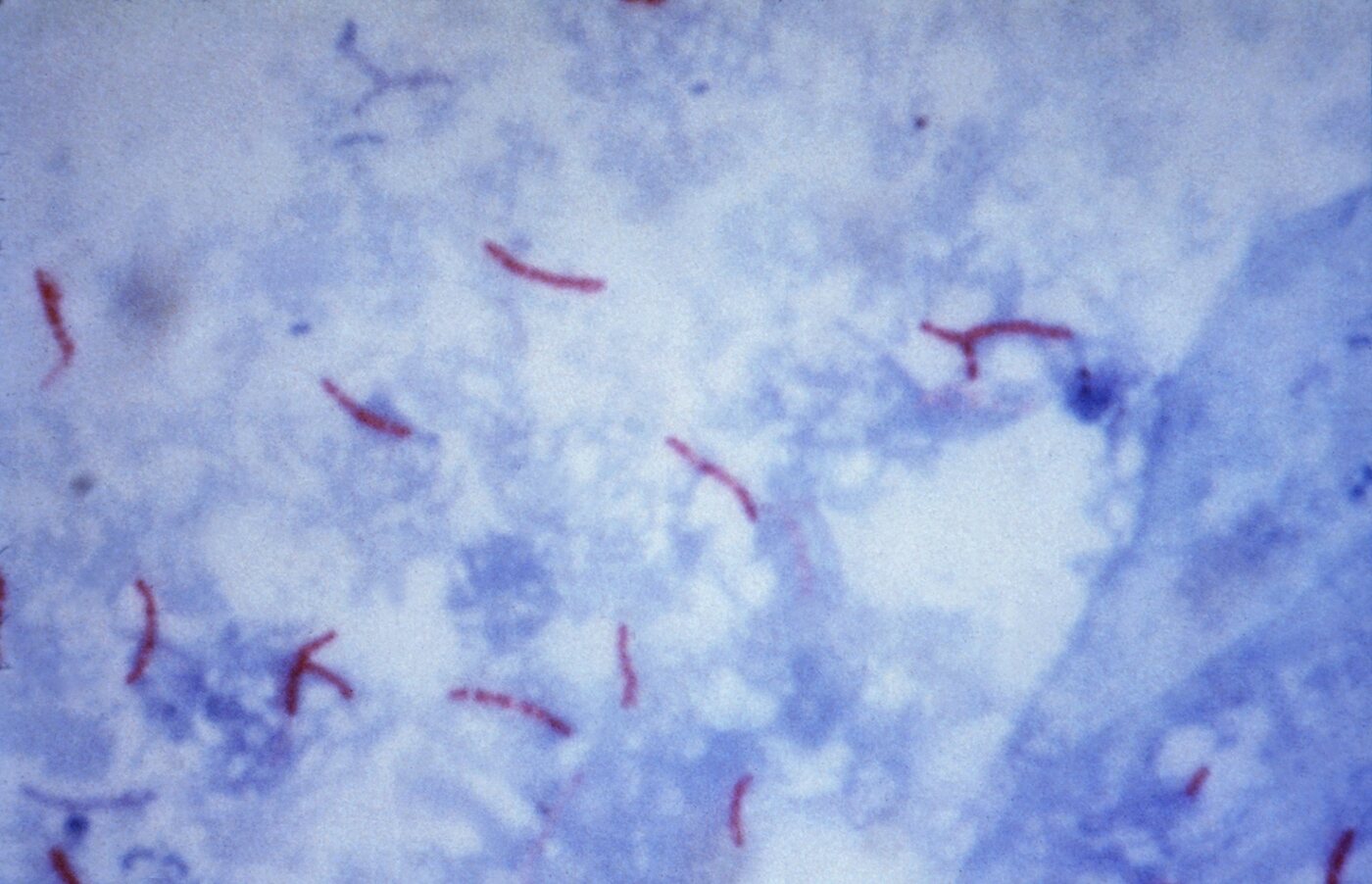
Image-based identification
Government programmes, schemes and services
- Programme: National Tuberculosis Elimination Programme (NTEP): Finds TB early and provides free diagnosis, drug-resistance testing, treatment, contact screening and preventive treatment to reduce TB illness, deaths and transmission.
- Service: Ni-kshay: The national digital system used to notify TB cases, follow treatment and process patient-support benefits.
- Scheme: Ni-kshay Poshan Yojana: Provides every notified TB patient ₹1,000 per month by direct benefit transfer for nutritional support during treatment.
- Campaign: TB-Mukt Bharat Abhiyaan: Intensifies screening of vulnerable people, including people without symptoms, and links detected cases to testing, treatment and nutrition support.
- Linked initiative: Pradhan Mantri TB Mukt Bharat Abhiyaan / Ni-kshay Mitra: Mobilises voluntary community support such as nutrition, psychosocial help and livelihood assistance for people with TB and their household contacts.
Prevention
- Prevent: Early detection and notification, cough hygiene, ventilation, contact screening, tuberculosis preventive treatment for eligible contacts/high-risk people, Bacillus Calmette–Guérin vaccination
Treatment and cure reality
- Treat: Curable with a complete programme-prescribed multidrug regimen; drug-resistant disease needs resistance-guided treatment.
Must remember
- Main spread: Airborne droplet nuclei from a person with infectious pulmonary tuberculosis; it is not mainly spread by utensils or casual touch.
- Classic pulmonary clues: Cough, fever, night sweats, weight loss, weakness, and sometimes haemoptysis.
- Presumptive tuberculosis: Symptoms or an abnormal chest X-ray should lead to testing; do not diagnose from symptoms alone.
- Preferred rapid tests: Nucleic Acid Amplification Tests, including Cartridge-Based Nucleic Acid Amplification Test and Truenat, can detect tuberculosis and rifampicin resistance.
- Microscopy: Sputum smear detects acid-fast bacilli but is less sensitive than molecular testing and does not fully define drug resistance.
- Government screening approach: Vulnerable populations may be screened with chest X-ray, followed by upfront molecular testing when indicated.
- First-line drug memory set: Isoniazid, rifampicin, pyrazinamide, and ethambutol. Do not memorize an unsupervised regimen or dose.
- Multidrug-resistant tuberculosis: Resistance at least to isoniazid and rifampicin.
- Directly Observed Treatment, Short-course: DOTS is a historical/high-yield strategy term; current programme language is broader than merely watching tablets.
- Bacillus Calmette–Guérin vaccine: Given at birth or as early as possible; mainly protects young children from severe forms such as tuberculous meningitis and miliary tuberculosis.
- Ni-kshay: Digital platform used for notification, patient tracking, treatment adherence, and programme monitoring.
- Ni-kshay Poshan Yojana: Nutritional support is ₹1,000 per month from 1 November 2024; older ₹500 questions are outdated.
- Name trap: Revised National Tuberculosis Control Programme → National Tuberculosis Elimination Programme, effective 1 January 2020.
- Target trap: India announced the goal of tuberculosis elimination by 2025. In a current question, treat this as the programme target—not proof that transmission has ended.