Non-communicable · Very high priority
Hypertension, cardiovascular disease, and stroke
Core disease facts with the linked government programme, prevention and treatment or cure reality.
TypeNon-infectious cardiovascular conditions; not caused by a bacterium or virus.
Image-based identification
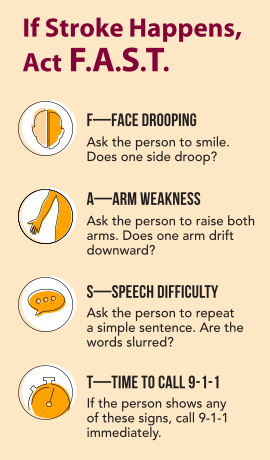
Government programmes, schemes and services
- Programme: National Programme for Prevention and Control of Non-Communicable Diseases (NP-NCD): Screens adults aged 30 years and above, promotes risk-factor control and links hypertension, heart-disease and stroke patients to treatment, referral and follow-up.
- Service: Ayushman Arogya Mandir: Provides community-level blood-pressure screening, medicines and continuing follow-up for uncomplicated hypertension and other NCDs.
- Odisha initiative: Odisha STEMI programme: Uses rapid ECG interpretation, referral and linked cardiac-care units to shorten treatment delay for ST-elevation myocardial infarction.
Prevention
- Prevent: Blood-pressure screening ≥30 years, salt reduction, activity, weight control, no tobacco, diabetes/lipid control, BE-FAST awareness
Treatment and cure reality
- Treat: Hypertension is usually controlled long term, not permanently cured; acute heart attack/stroke need emergency treatment, followed by secondary prevention and rehabilitation.
Must remember
- Hypertension is often silent: Do not wait for headache or symptoms.
- Programme diagnostic threshold: Persistent clinic blood pressure at or above 140/90 mmHg, confirmed on separate measurements/occasions unless urgent severity requires immediate action.
- Correct measurement: Rest 5 minutes, correct cuff size, arm supported at heart level, feet supported, no talking, repeat an elevated reading.
- Major modifiable risks: Tobacco, high salt intake, obesity, physical inactivity, unhealthy diet, harmful alcohol use, diabetes, and dyslipidaemia.
- Complications: Stroke, coronary artery disease, heart failure, chronic kidney disease, retinopathy, and peripheral vascular disease.
- Hypertensive emergency: Severe blood pressure plus acute target-organ damage; the number alone does not define the emergency.
- Acute coronary syndrome clues: Central pressure/heaviness, radiation to arm/jaw/back, sweating, dyspnoea, nausea; older adults and people with diabetes may have atypical symptoms.
- Stroke recognition: BE-FAST—Balance, Eyes, Face, Arm, Speech, Time.
- Stroke test: Non-contrast computed tomography urgently distinguishes haemorrhage from likely ischaemic stroke before thrombolytic decisions.
- Transient ischaemic attack: Neurological deficit resolves, but urgent assessment is still needed because early stroke risk is high.
- Primary prevention: Tobacco cessation, salt reduction, activity, healthy weight, diabetes/lipid control, and adherence to treatment.
- Programme screening: All adults 30 years and above are targeted for annual blood-pressure and diabetes screening.